The Life a Person Returns To
A reflection from Jason Roop after speaking at the FDA’s public hearing on the potential future therapeutic use of psychedelic drugs.
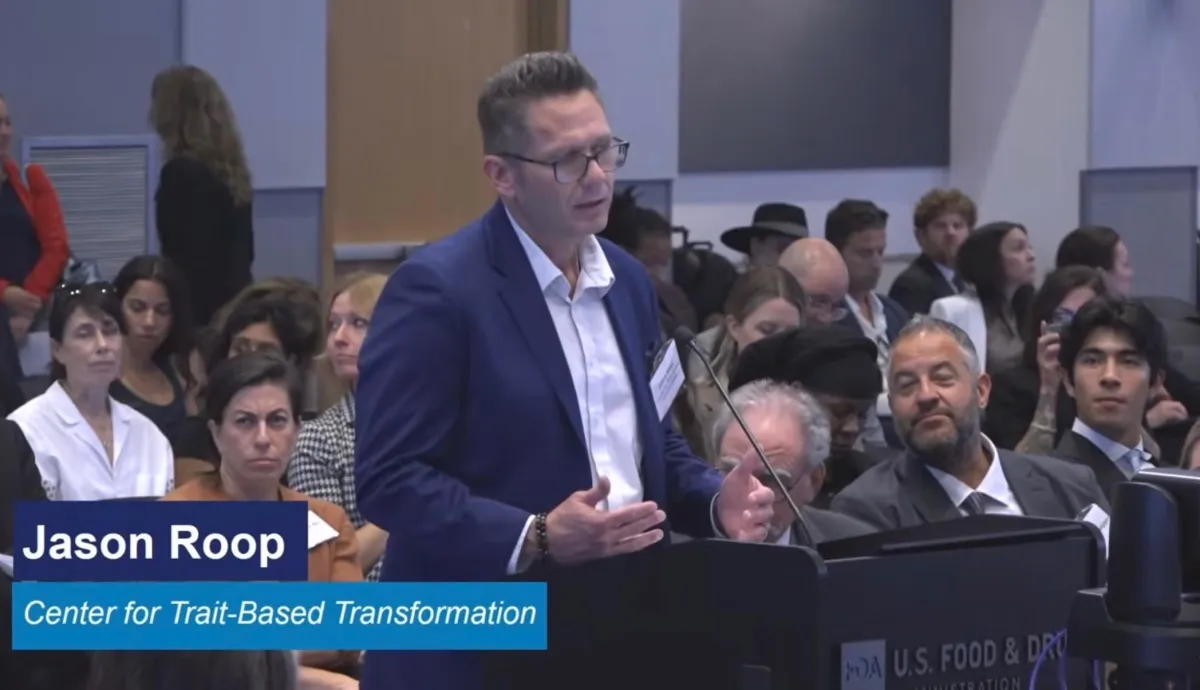
On September 14, I stood at the FDA’s White Oak Campus to offer public comments on the potential future therapeutic use of psychedelic drugs in supervised and supportive settings.
I carried a simple question with me:
What happens to the person after the experience is over?
I do not know which treatments will ultimately be approved. I do not believe any substance can magically transform someone into everything they have always wanted to become.
A treatment may open a door. It may create a moment of insight, relief, or possibility. But the person receiving it still has a life to live afterward.
They return to relationships, responsibilities, choices, memories, pressures, and patterns. They return to the question of who they are—and who they might still become.
That part of care deserves our attention, too.
A lesson in how to see
Long before I stood at the FDA, my mother, Anna Jean Roop, was teaching me how to see people.
“Always see the good in someone.”
She kept seeing it in me, even when it hurt her to do so. Over the years, other people called me back to that same way of seeing. Eventually, I began to recognize strengths in places where I had been taught to look only for problems.
I saw them in addiction. I saw them in rehab. I saw them in people whose lives had reached the point where almost all hope had been abandoned.
The strengths were still there, even when the person carrying them could no longer see them.
That understanding changed how I saw myself. My identity began to include strengths I had never given myself credit for. I began making choices from a different understanding of who I was and what I could build.
That understanding eventually gave rise to the Trait-Based Model.
What comes after insight
Trait-Based work does not promise that insight alone will change a life. It helps people recognize the capacities already within them, understand how those capacities operate under pressure, and develop the ability to respond more intentionally.
Whatever treatments become available, people will still need language for understanding themselves. They will still need relationships, environments, and practices that help them carry insight into everyday life. They will still need opportunities to recognize what is strong, develop what comes next, and build an identity that is larger than what happened to them.
Where Trait-Based may contribute
Psychedelic therapies remain an area of active research. The FDA notes that these drugs present unique scientific and safety questions, and that some development programs combine a drug with psychological or behavioral support. The work surrounding an experience—not only the substance itself—therefore deserves careful attention.
Trait-Based is not a psychedelic treatment, and it does not replace medical care, psychotherapy, trained supervision, or rigorous evidence. It may, however, offer a useful developmental structure around that care:
Preparation: helping people develop a non-pathologizing language for identity, strengths, stress patterns, and intention.
Integration: helping people make meaning from what emerged and translate insight into relationships, choices, and daily practice.
Ongoing development: returning attention to capacities that can be understood, balanced, and strengthened over time—not only symptoms that may be relieved.
This is the contribution I believe Trait-Based can make: not replacing treatment, but helping ensure that a powerful experience becomes connected to a person’s continuing development.
That possibility should be studied carefully, ethically, and with the same commitment to safety and evidence expected of every other part of care.
My mother taught me to see the good in someone.
My life’s work has become helping people recognize it in themselves—and discover what they can build from it.
At the FDA, I had the opportunity to carry that lesson into a national conversation.
The life a person returns to deserves as much attention as the experience that changed them.
Start from Strength.
View the official FDA hearing information and the FDA’s final guidance for psychedelic-drug clinical investigations.
